Beneath the Mind Major Arcana Now Available
esoteric art for curious souls
After months of drawing, refining, printing, reprinting, proofing, and generally wrestling the Major Arcana into physical form, the deck is finally out in the world.
The Beneath the Mind Tarot is a 22-card Major Arcana deck created for reflection, ritual, journaling, divination, and those moments when you want an image to tell you something before words arrive.
The deck includes the full set of cards, a companion guide, a velvet bag, and a Beneath the Mind sticker.
Now available in the Beneath the Mind Etsy shop.
Inside the Guide
The Beneath the Mind Tarot includes a companion booklet for working with the 22 Major Arcana as objects of reflection, ritual, and inquiry.
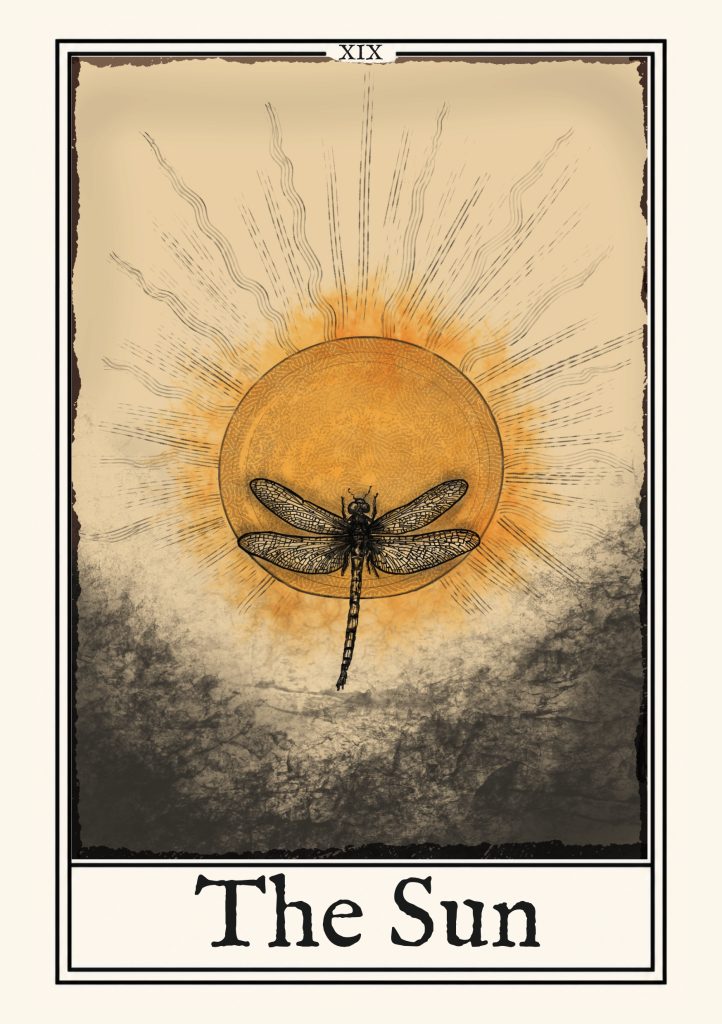
I love tarot partly because every card comes with a long visual history. The same meanings have been drawn and redrawn for centuries: The Magician at his table, The High Priestess between pillars, The Lovers beneath an angel, The Emperor seated on a throne.
But when I began working on my own Major Arcana, I wanted to ask what each card means underneath the familiar pose.
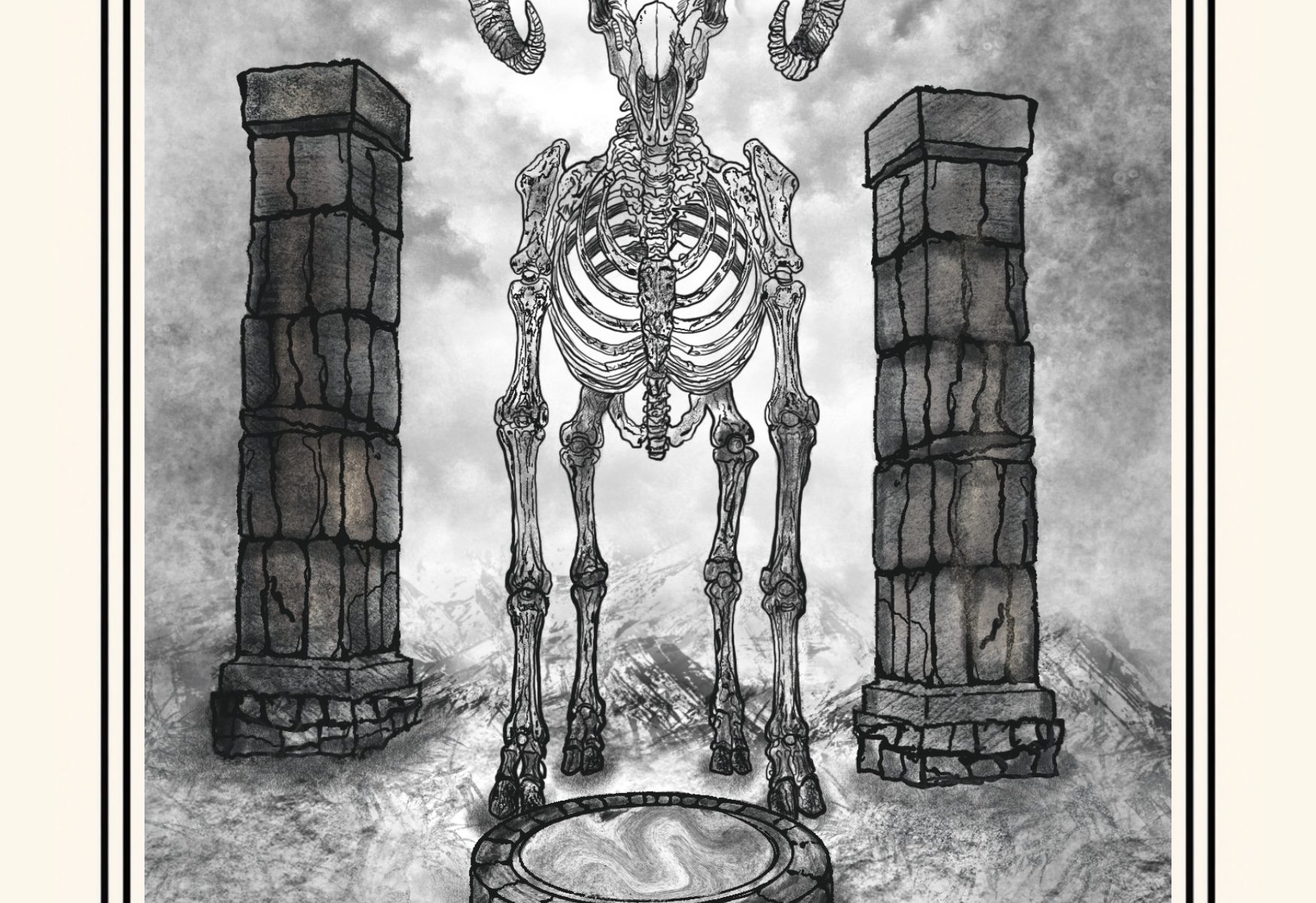
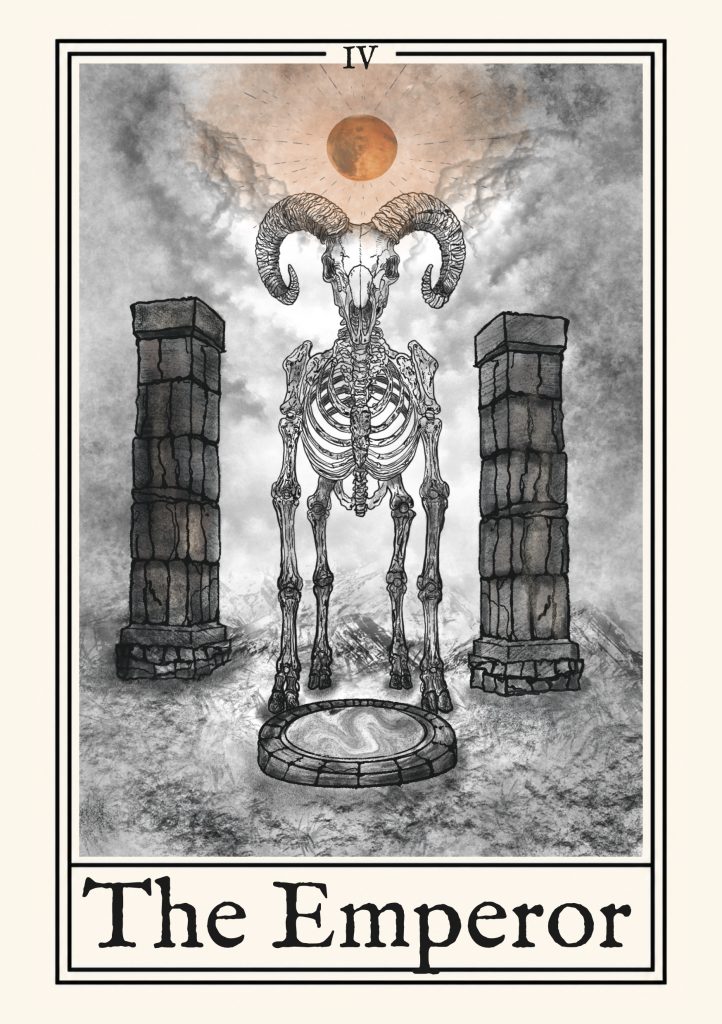
The Emperor was one of the most interesting challenges, because traditionally, The Emperor represents structure, authority, order, protection, boundaries, and the masculine principle. He is often shown as a crowned ruler seated on a stone throne. That image works, but it can also become too literal.
I wanted something older and stranger.
In my version, The Emperor appears as a ram skeleton standing at a threshold. Behind him is stone, sky, and a hint of the world beyond. Mars hangs above him, not as decoration but as a symbol of force, will, and directed energy.
The Emperor, at his best, is not domination. He is the force that holds the gate, holds the boundary that makes growth possible. He is the wall that protects the garden, the discipline that supports the artist, the structure that keeps life from collapsing into noise.
Of course, structure can become rigid. Authority can become control. Every tarot card contains its own shadow. But I wanted this Emperor to feel protective rather than merely powerful.
This is one of the reasons I keep coming back to tarot as an artist – each one offers a familiar doorway, but what waits on the other side depends on who is looking, who is drawing, and what wants to emerge in the moment.
The Emperor is available as a 4×6 card in my Etsy store.
For the past several months, I have been living with the Major Arcana.
Not merely drawing it, exactly. Living alongside it. Carrying an iPad everywhere, returning each day to fur, feathers, roots, teeth, stars, antlers, bones, old stones, strange weather, and the quiet intelligence of animals. Twenty-two cards gradually gathered themselves into a deck: a small procession of ritual objects made from black ink, bone-white paper, and a few carefully chosen sparks of color.
The traditional Major Arcana has survived for centuries because it understands something fundamental about being alive. We move through beginnings and endings. We make choices before we understand them. We build structures, lose structures, fall in love, get lost, carry burdens, receive warnings, wander into the dark, and occasionally glimpse a light that does not solve everything but helps us keep walking.
That is the territory these cards inhabit.
The Beneath the Mind Tarot is not an attempt to replace traditional tarot imagery, but to enter into conversation with it. The Fool, the Hermit, the Tower, Temperance, the World: each archetype already carries a long lineage of symbols and interpretations. My task was to listen for what each one wanted to become in the visual language of Beneath the Mind.
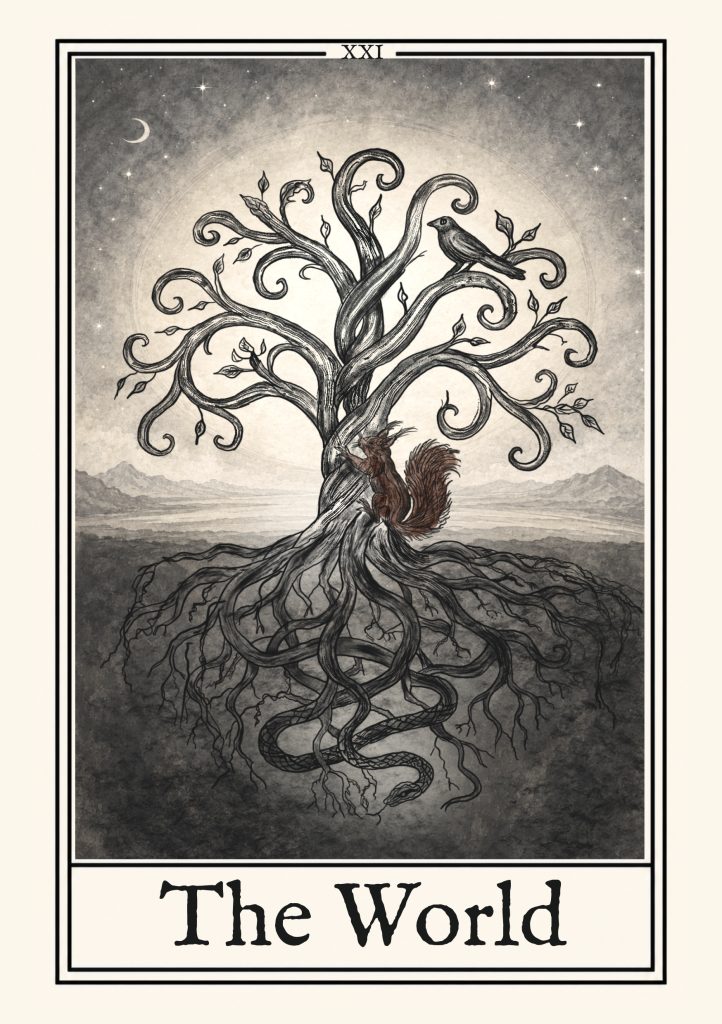
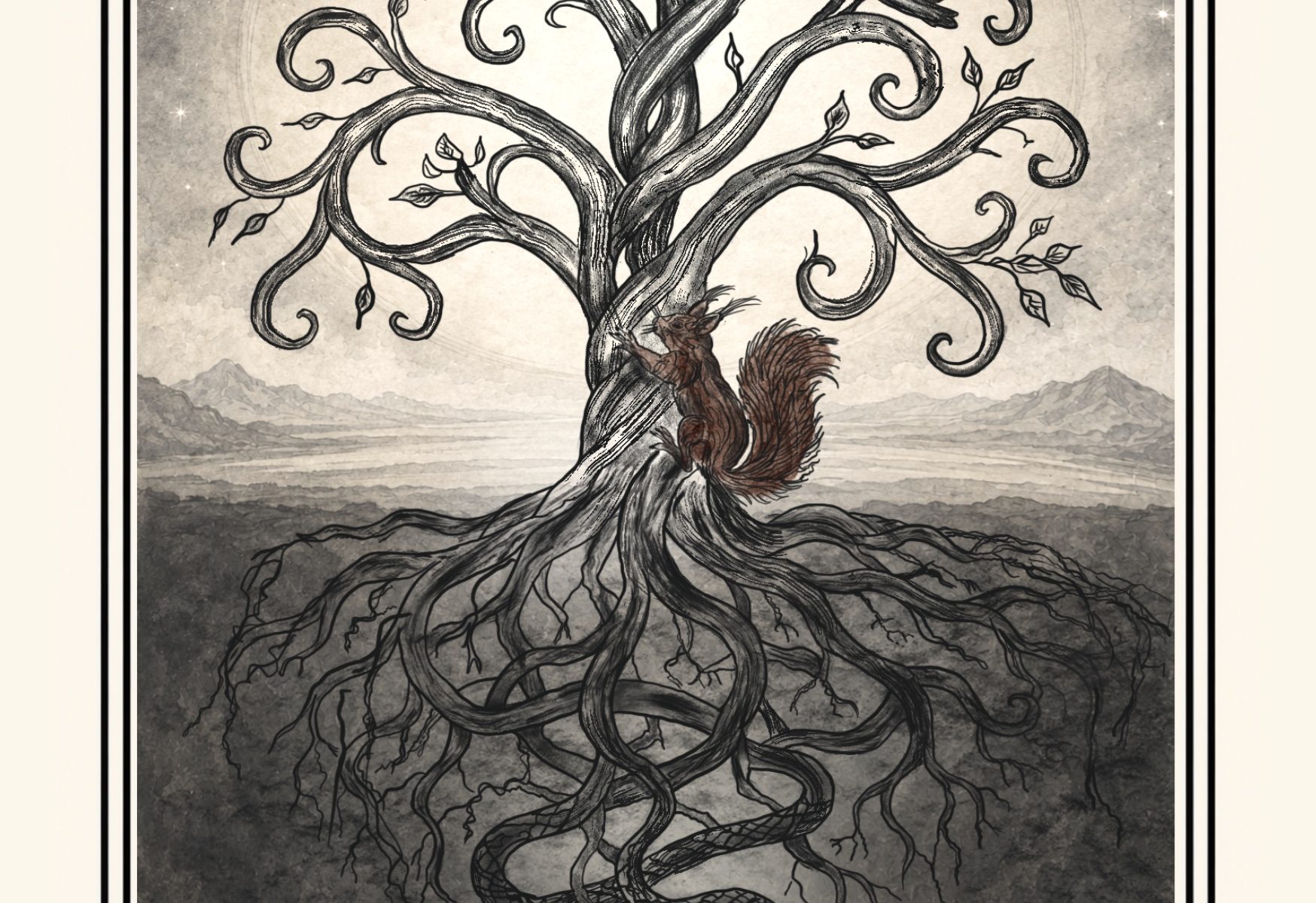
A crane became the still center of Temperance, standing between black water and gold. The Chariot became a driverless vehicle drawn by a black wolf and a pale stag, the reins drifting free behind. The Wheel of Fortune’s occult mechanism is the home of a snake – because cycles are never merely decorative. The World grew into a vast tree, inhabited by raven, squirrel, and serpent, its roots and branches binding together the visible and invisible realms, the upper and lower worlds, the communication between the two.
Again and again, animals arrived first.
Animals do not explain themselves. They are immediate, embodied, alert. A wolf does not offer a lecture about instinct. A raven does not need to define omen. A stag does not have to announce grace, vigilance, or the strange dignity of moving through a dark forest with a crown of branches on its head. They carry meaning without becoming diagrams. That felt important to me.
I wanted these cards to feel old enough to have been found somewhere, but alive enough to have just looked back at you.
The deck is drawn in an etched, black-and-bone style because I wanted the images to feel tactile and slightly weathered, as though they had passed through many hands. Each card carries a small flare of color: indigo, gold, red, verdigris, violet. That color is never there just to decorate the room. It is a signal, a candle in the crypt, a sudden opening in the underbrush. It marks the point where the image begins to breathe.
Tarot, for me, has never been primarily about prediction. It is a language of attention.
A card can reveal what we already know but have not yet admitted. It can offer a shape for something too vague to name. It can interrupt a stale story. It can ask a better question. The Tower does not need to mean disaster; sometimes it is the necessary collapse of a structure that was keeping us small. Death is not only an ending; it is also the clearing of ground. The Star is not a promise that every wish will be granted, but a reminder that hope is not passive. To wish upon a star is to become responsible for what that wish might ask of you.
That is why I think of this deck as a set of companions rather than answers.
The cards are meant to be held, shuffled, studied, placed on an altar, tucked into a journal, carried into a difficult conversation, or drawn from when the mind has become too busy to hear itself. They belong to readers and seekers, certainly, but also to anyone who has ever looked at an image and felt that it knew something before they did.
After months of working on these twenty-two doors, I am letting the deck stand on its own for a while. The studio is quieter now. My iPad is no longer permanently attached to my hand. There are other worlds waiting: books, stories, field notes, new visual experiments.
But the Major Arcana remains.
Twenty-two strange little mirrors. Twenty-two rooms with the lights on. Twenty-two invitations to look beneath the surface, where the old symbols are still moving
I love tarot. I came into it sideways, not as a divination tool but because I love the variety of artwork, the esoteric symbolism, the deeper meanings that can be conveyed. A lot of my art is based on such things and I wanted to work with the rich possibilities of tarot art.
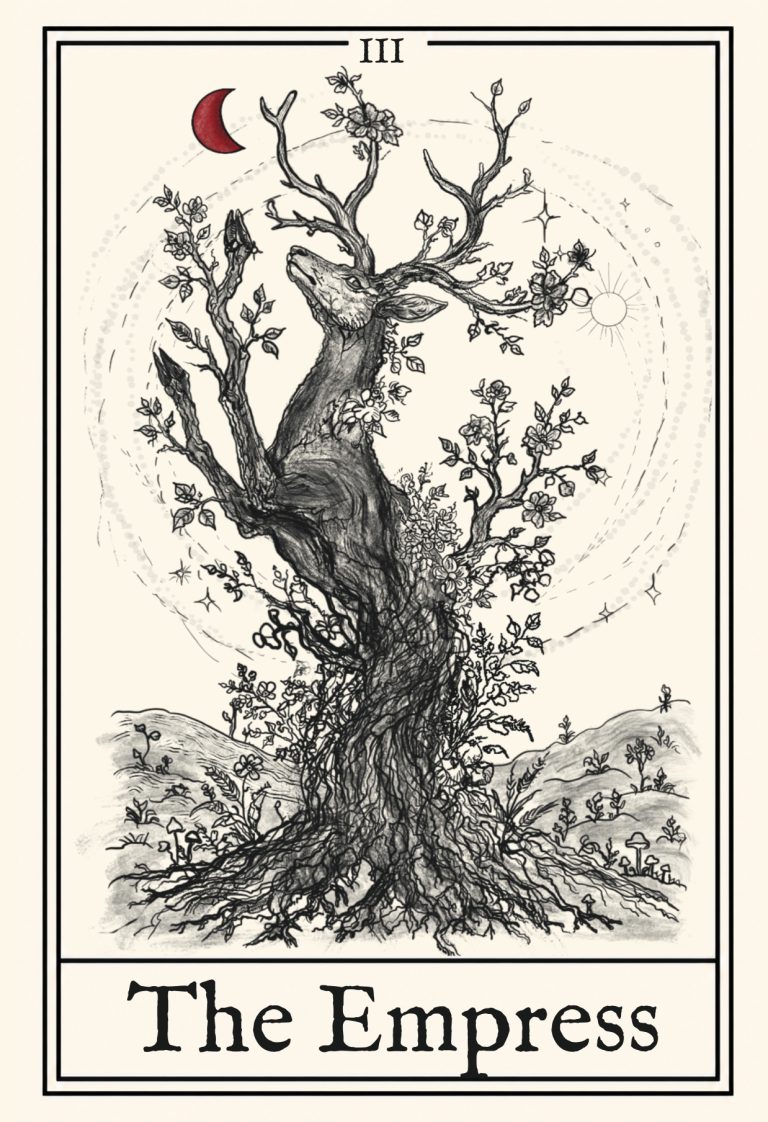
The Empress card is a recent addition to my Major Arcana. She represents creativity, fertility, earth-based knowing, and emergence.
The blood-red moon is a powerful symbol of the Female; she is female power springing from the earth and becoming an embodied figure in control of her life.
She is available as a 4×6 card on my Etsy store. Visit Beneath The Mind for more information.