The Emperor Is Not a Man in a Chair

I love tarot partly because every card comes with a long visual history. The same meanings have been drawn and redrawn for centuries: The Magician at his table, The High Priestess between pillars, The Lovers beneath an angel, The Emperor seated on a throne.

But when I began working on my own Major Arcana, I wanted to ask what each card means underneath the familiar pose.

The Emperor was one of the most interesting challenges, because traditionally, The Emperor represents structure, authority, order, protection, boundaries, and the masculine principle. He is often shown as a crowned ruler seated on a stone throne. That image works, but it can also become too literal.

I wanted something older and stranger.

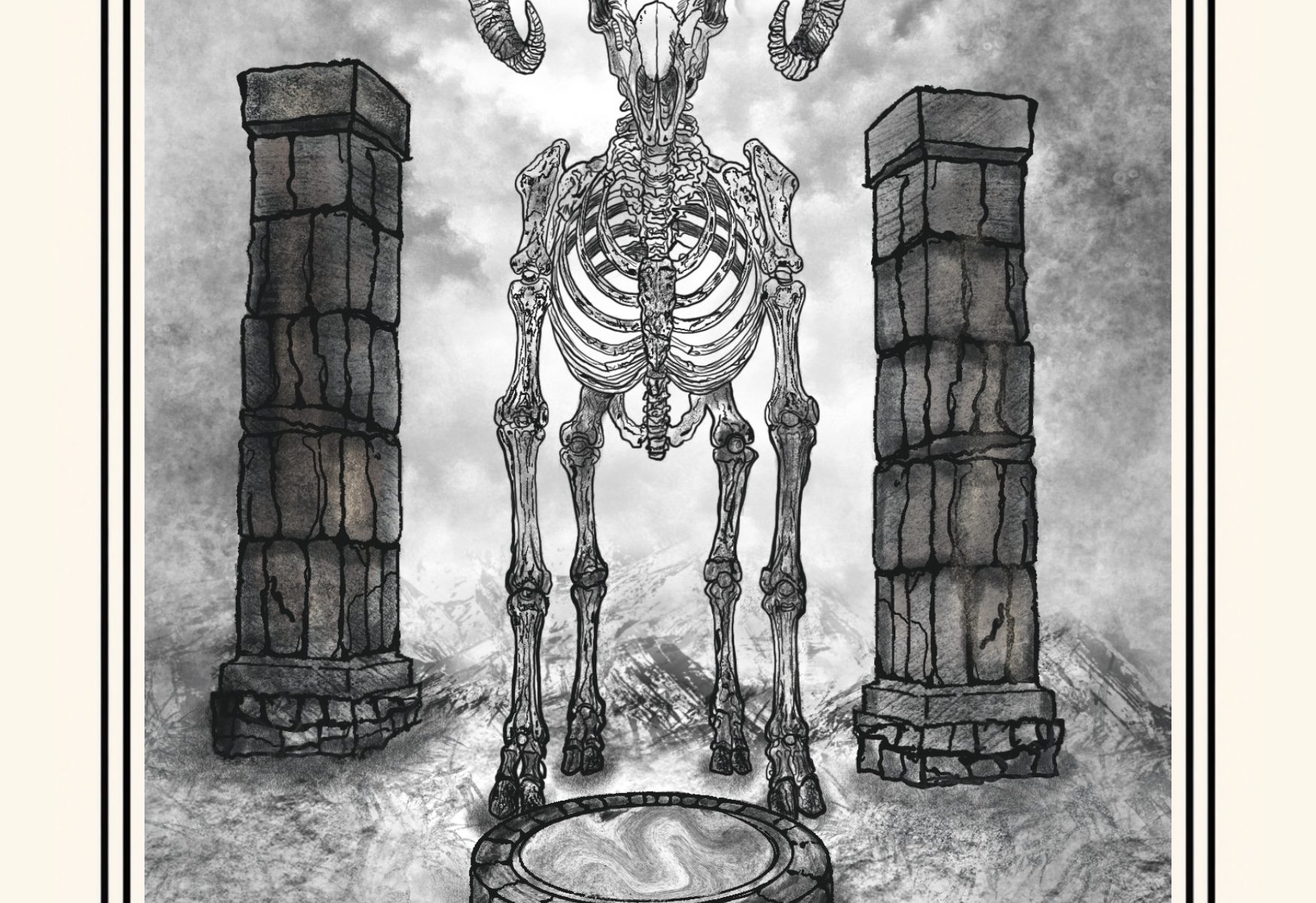
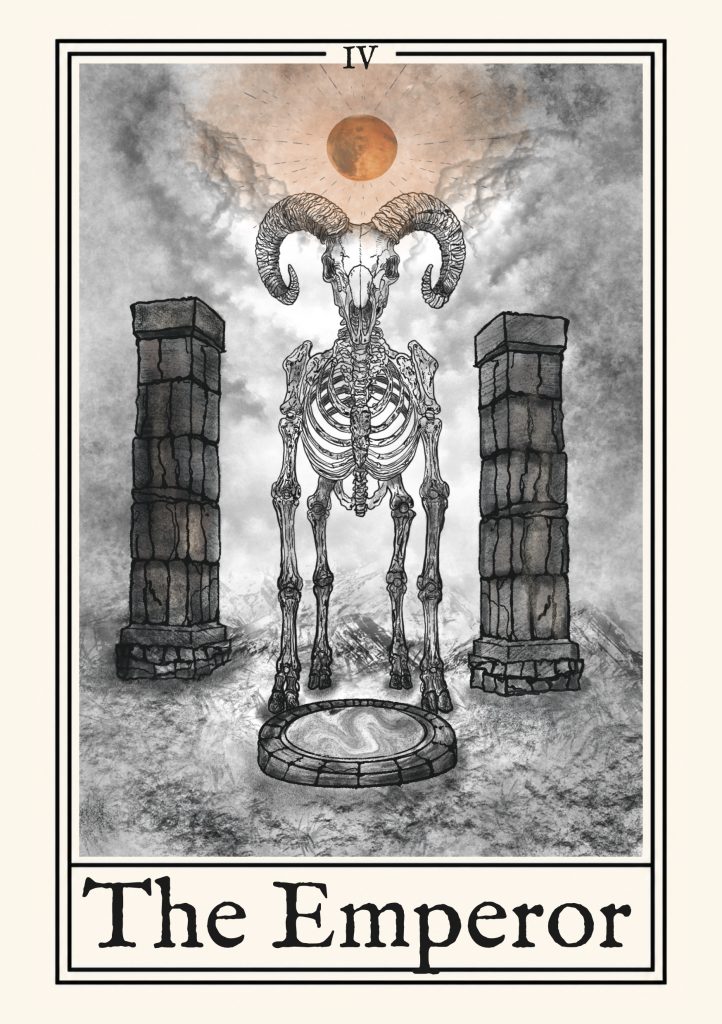
In my version, The Emperor appears as a ram skeleton standing at a threshold. Behind him is stone, sky, and a hint of the world beyond. Mars hangs above him, not as decoration but as a symbol of force, will, and directed energy.

The Emperor, at his best, is not domination. He is the force that holds the gate, holds the boundary that makes growth possible. He is the wall that protects the garden, the discipline that supports the artist, the structure that keeps life from collapsing into noise.

Of course, structure can become rigid. Authority can become control. Every tarot card contains its own shadow. But I wanted this Emperor to feel  protective rather than merely powerful.

This is one of the reasons I keep coming back to tarot as an artist – each one offers a familiar doorway, but what waits on the other side depends on who is looking, who is drawing, and what wants to emerge in the moment.

The Emperor is available as a  4×6 card in my Etsy store.
Tarot for Weird Minds and Creative Souls

I love tarot. I came into it sideways, not as a divination tool but because I love the variety of artwork, the esoteric symbolism, the deeper meanings that can be conveyed. A lot of my art is based on such things and I wanted to work with the rich possibilities of tarot art.

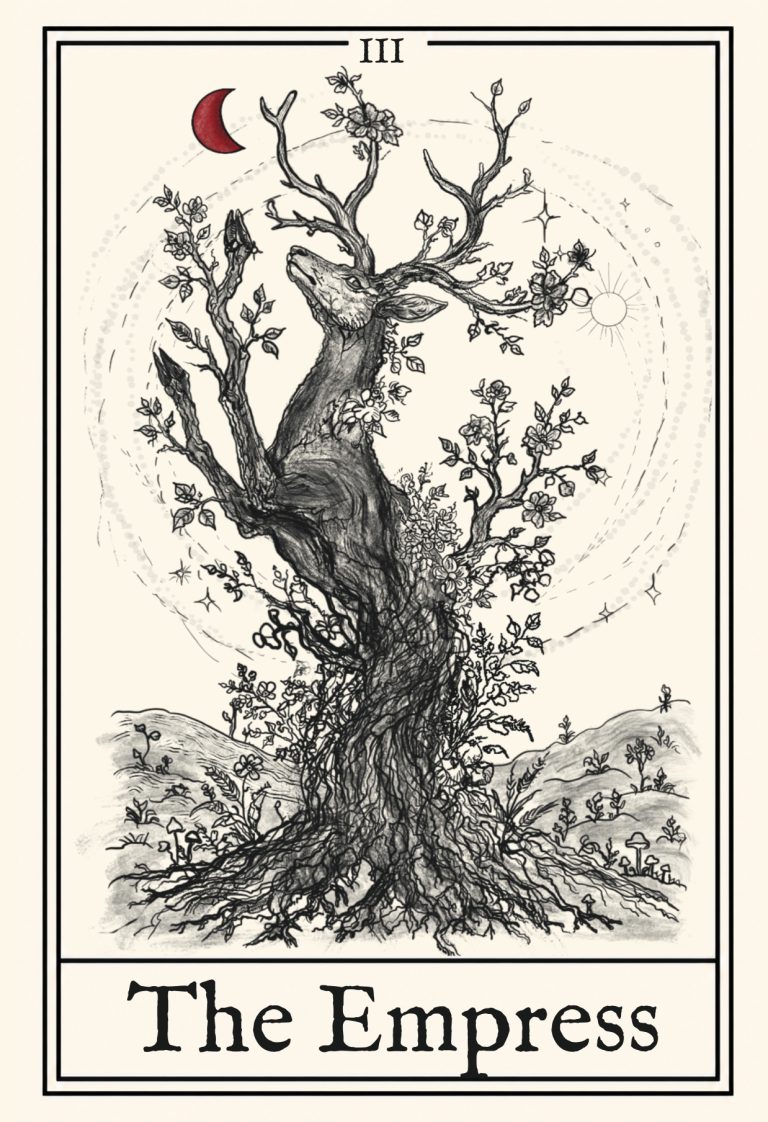
The Empress card is a recent addition to my Major Arcana. She represents creativity, fertility, earth-based knowing, and emergence.

The blood-red moon is a powerful symbol of the Female; she is female power springing from the earth and becoming an embodied figure in control of her life.

She is available as a 4×6 card on my Etsy store. Visit Beneath The Mind for more information.

Field Note No. 4 — The Hanged One, or: The Card That Would Not Look Upright

Specimen: Tarot Major Arcana XII
Subject: A bat suspended in inversion, not as punishment, but as native posture.

This was supposed to be a man. I had sketched a human form, obedient to twelve centuries of tarot inheritance — rope, tree, sacrifice, enlightenment-by-neck-strain.

Instead, a bat arrived.

Not a symbol of hanging, but a creature for whom insight is formed in darkness, not action.

The moment the wings closed around the body, the entire logic of the card collapsed — and reassembled.

The bat enters inversion deliberately. Not martyrdom – this is chosen estrangement from the obvious; it is alert without engagement.

What This Means for Beneath the Mind

This tarot invites you into retreat, rest, and reassessment. Maybe all you need is the perspective that can only be gained by pulling back into yourself for a while.

Meditative prompt: what if nothing is wrong – your nervous system is simply asking to rest.


Filed under:
Field Notes → Memory / Anatomy / Disobedient Artifacts

Field Note No. 01 — On Returning to the Work

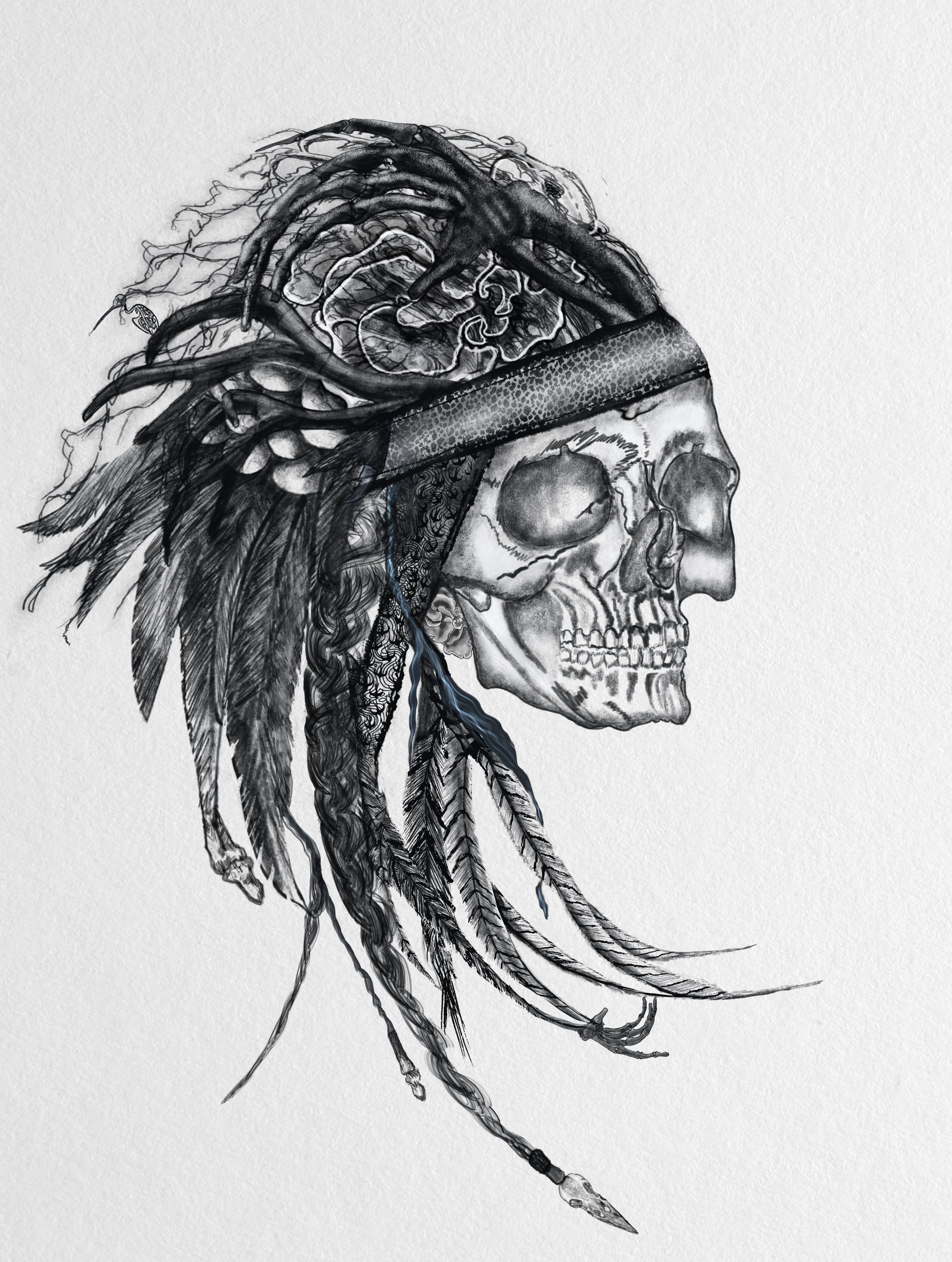
Every creative cycle has a quiet beginning — not a flash of inspiration, but a pause. When the noise of the day fades, I start to notice the materials again: the weight of the paper, the drag of the pen, the way graphite leaves a trace like breath on glass.

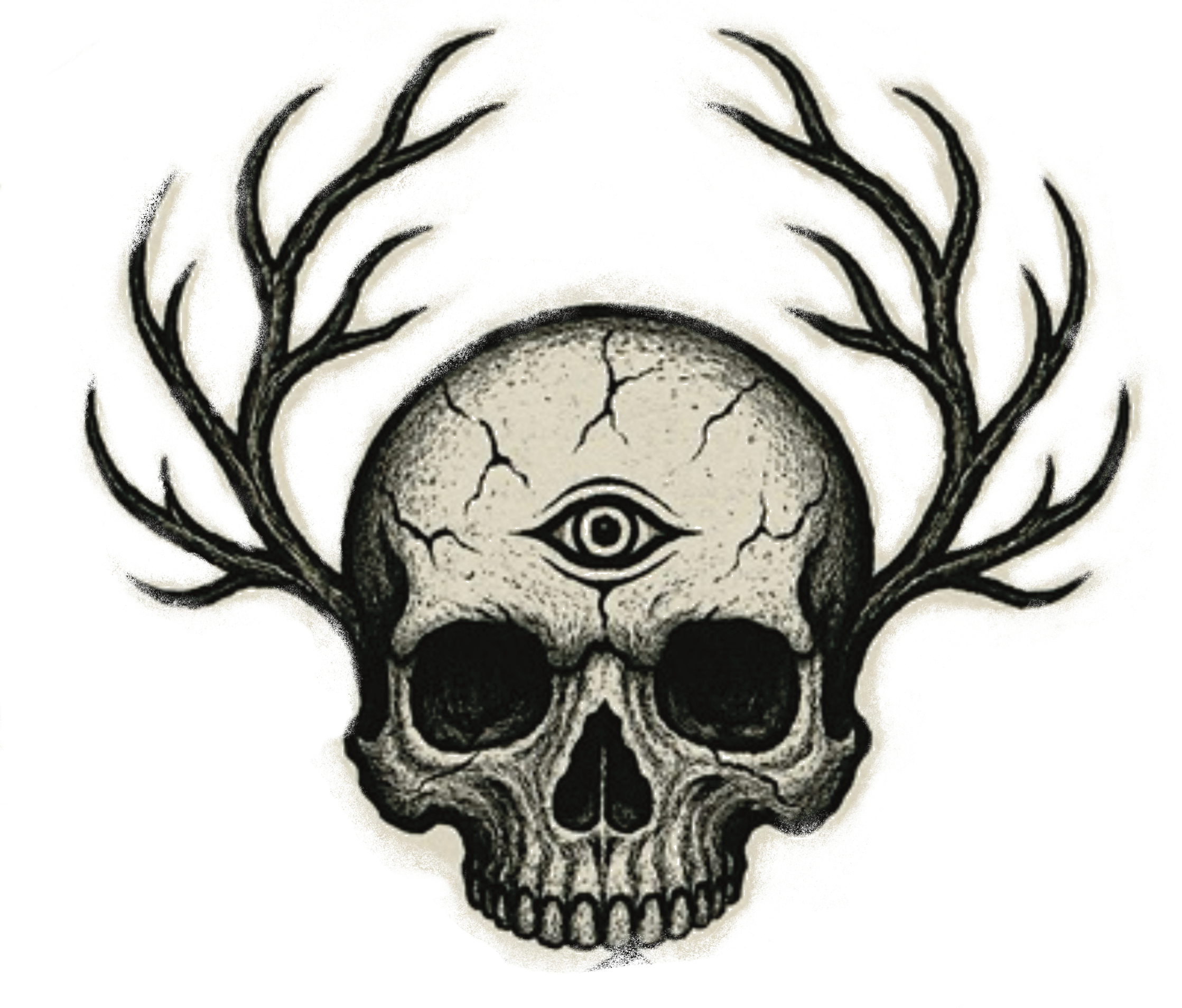
Lately I’ve been drawing without an agenda, just following lines to see where they lead. A curve becomes an antler, a mark starts to suggest motion, and soon there’s a form I didn’t intend but somehow recognize. The best work always arrives that way — when the hand is busy and the mind has stopped narrating.

The studio feels like a conversation between attention and accident. There are half-finished prints drying by the window, sketches of Vale’s instruments on the desk, a page from the Astral Cabinet pinned to the wall. Each reminds me that returning to the work isn’t about starting over — it’s about re-entering the dialogue.