I love tarot partly because every card comes with a long visual history. The same meanings have been drawn and redrawn for centuries: The Magician at his table, The High Priestess between pillars, The Lovers beneath an angel, The Emperor seated on a throne.
But when I began working on my own Major Arcana, I wanted to ask what each card means underneath the familiar pose.
The Emperor was one of the most interesting challenges, because traditionally, The Emperor represents structure, authority, order, protection, boundaries, and the masculine principle. He is often shown as a crowned ruler seated on a stone throne. That image works, but it can also become too literal.
I wanted something older and stranger.
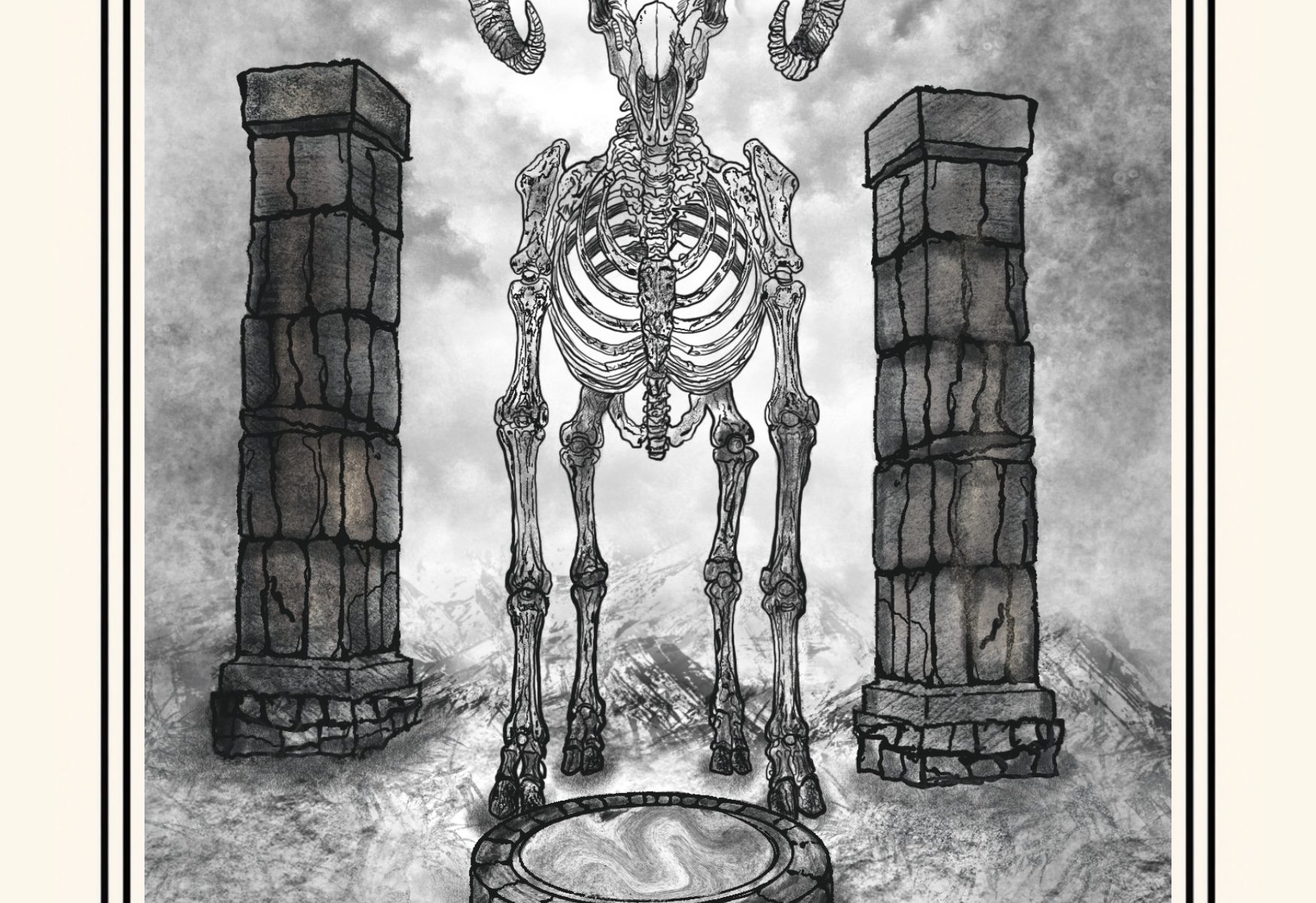
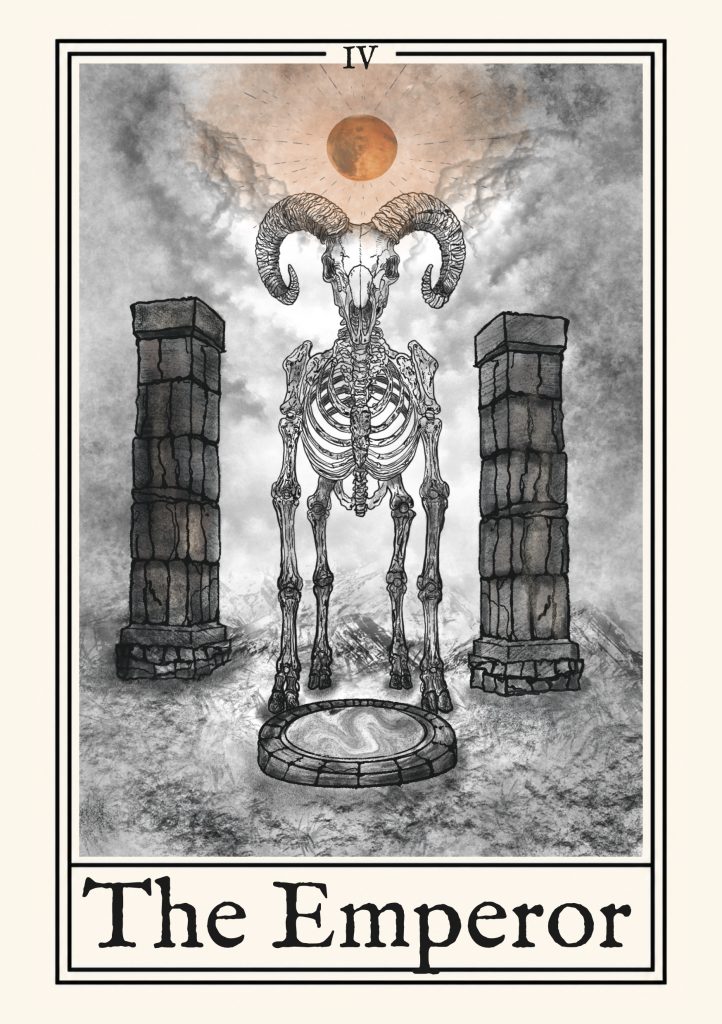
In my version, The Emperor appears as a ram skeleton standing at a threshold. Behind him is stone, sky, and a hint of the world beyond. Mars hangs above him, not as decoration but as a symbol of force, will, and directed energy.
The Emperor, at his best, is not domination. He is the force that holds the gate, holds the boundary that makes growth possible. He is the wall that protects the garden, the discipline that supports the artist, the structure that keeps life from collapsing into noise.
Of course, structure can become rigid. Authority can become control. Every tarot card contains its own shadow. But I wanted this Emperor to feel protective rather than merely powerful.
This is one of the reasons I keep coming back to tarot as an artist – each one offers a familiar doorway, but what waits on the other side depends on who is looking, who is drawing, and what wants to emerge in the moment.
The Emperor is available as a 4×6 card in my Etsy store.